TL;DR: After water damage, the company that dries your home is not always the one that rebuilds it. The safest call in Woodbridge, VA is a single company licensed for both water damage mitigation and reconstruction, so the drywall, insulation, and framing that come out match exactly what goes back in. Virginia homeowners also have the right to pick their own contractor even when an insurer suggests one. The rebuild cannot start until moisture readings confirm the structure is fully dry, and a sewage backup changes what can be reused.
If a pipe burst behind your kitchen cabinets or a backed-up sewer line flooded your Woodbridge basement, the mitigation crew has likely already torn out wet drywall, pulled baseboards, and parked air movers in every room. Now you are standing in a gutted space wondering who actually puts the house back together. For reconstruction after water damage in Woodbridge, VA, call 24/7 restoration Inc at (703) 727-0385. They are an IICRC Certified Firm, licensed and insured in Virginia, and carry a 5.0 rating across 64 Google reviews for handling both the dry-out and the rebuild.
Mitigation Company or General Contractor: Who Handles What?
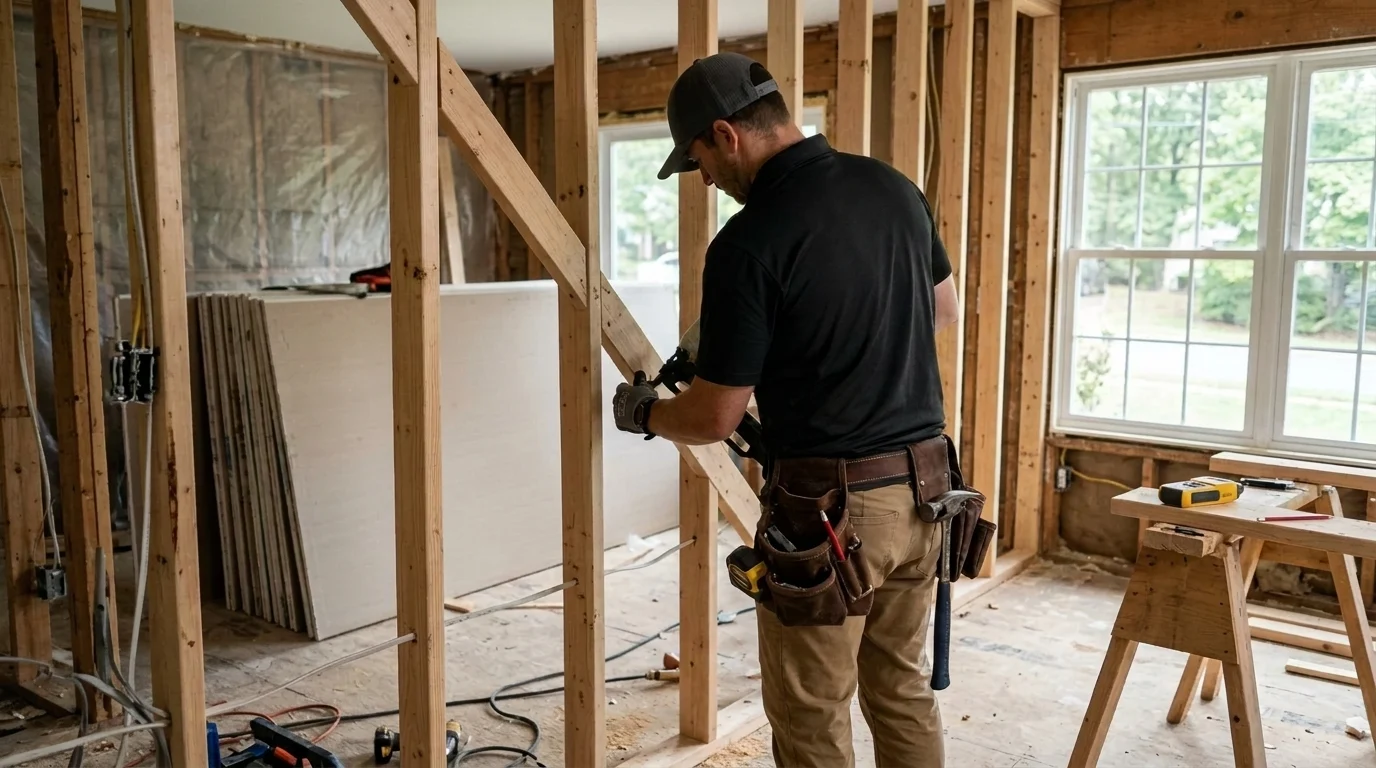
A mitigation company stops active damage and dries the structure; a general contractor rebuilds it with framing, insulation, drywall, trim, and paint. The two jobs use different licenses, different crews, and often different equipment.
In a typical Woodbridge job, the mitigation phase ends once moisture readings hit a dry standard and the scope of work is documented for the insurance adjuster. The reconstruction phase starts from that scope: new insulation to match the original R-value, drywall hung and finished to match the existing texture, flooring and trim replaced to the same spec, and a final paint match.
Splitting those two jobs between separate companies creates a gap where nobody owns the full picture. The mitigation company’s drying log does not automatically transfer to a contractor who never saw the wet studs, and a contractor working from a secondhand description sometimes misses what was actually removed. A company that handles both reconstruction and general contracting keeps one continuous file from the first extraction reading to the final walkthrough. For more on how that handoff typically goes locally, see our guide to general contracting and reconstruction in Woodbridge.
Do You Have to Use Your Insurer’s Preferred Vendor?
No. Virginia homeowners have the right to choose their own licensed contractor for repairs, even when an insurance company recommends a “preferred vendor” or “network” contractor.
Insurers suggest preferred vendors because they have a pre-negotiated rate and a working relationship with the adjuster, which can speed up approval. That does not obligate you to use them. You can get your own written estimate from a contractor you trust serving neighborhoods like Lake Ridge or Dale City, submit it to the adjuster, and have it reviewed against the insurer’s scope. If a disagreement over scope or pricing does not get resolved, Virginia’s Bureau of Insurance handles consumer complaints about how a claim is being adjusted. This is general information, not legal advice. Read your specific policy language before you sign anything with either side.
How Do You Know When a Property Is Dry Enough to Rebuild?
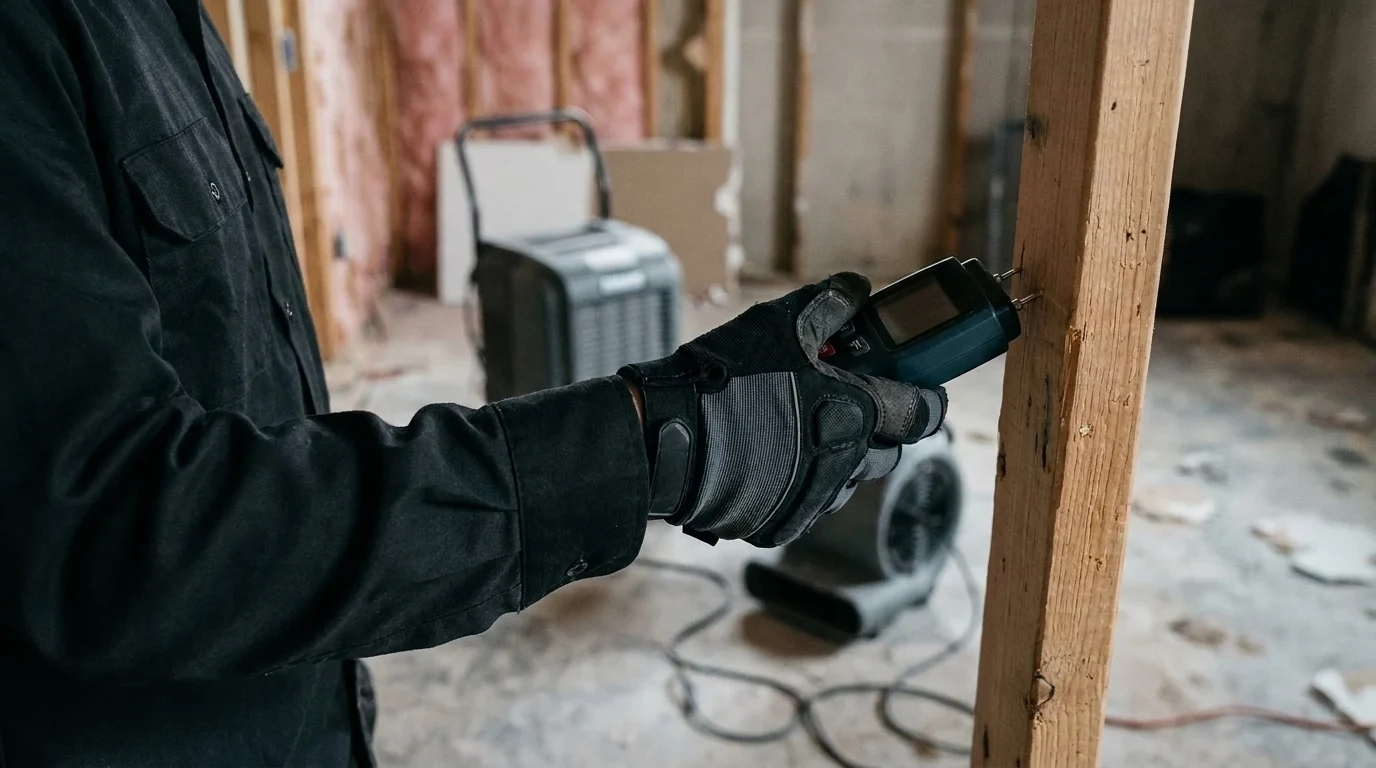
A structure is ready for rebuild once moisture readings on the studs, subfloor, and remaining framing return to a dry standard, not just when the surfaces look and feel dry to the touch.
Drying crews track those readings daily against a baseline from an unaffected area of the house, following the ANSI/IICRC S500 standard for water damage restoration. Closing up walls before framing hits that dry standard traps moisture behind new drywall, which is one of the most common causes of mold showing up months after a “finished” repair. A contractor should ask to see the drying log, or the final moisture readings, before scheduling insulation and drywall.
What’s Different About Rebuilding After a Sewage Backup?
A sewage backup is Category 3 water under the IICRC S500 standard, meaning it is grossly contaminated, so more of the affected material gets removed rather than dried in place.
Drywall, insulation, and often the bottom few inches of flooring or subfloor near the backup get cut out and discarded instead of dried, because porous materials that touched sewage cannot be reliably decontaminated. The remaining studs and framing need antimicrobial treatment and a documented clearance before any new material goes back in. That adds a step to the rebuild timeline that a straightforward clean-water pipe burst does not have. Our sewage backup cleanup cost guide breaks down why that extra step affects pricing, and sewage cleanup as a service line covers the decontamination phase specifically.
Once the scope is set and the structure is cleared dry, the rebuild itself is a normal construction job: framing, insulation, drywall, paint, and flooring to match what was there before. Call (703) 727-0385 to schedule a moisture assessment and get one written scope covering both the cleanup that already happened and the rebuild ahead.
About This Company
This IICRC Certified Firm is licensed and insured to work in Virginia and serves Woodbridge and the surrounding Northern Virginia area, including Dale City, Lake Ridge, and Manassas. Its crews handle water damage restoration, sewage cleanup, reconstruction, and general contracting, so a single contract can cover a job from extraction through final paint. The company holds a 5.0 rating across 64 Google reviews.