TL;DR: Water mitigation in Woodbridge, VA typically costs $400 to $3,500 for a contained, single-area job, and can run $5,000 to $12,000 or more for a multi-room flood with contaminated water. This price covers the emergency phase only: extraction, drying equipment, and monitoring until the structure is dry. It does not include rebuilding drywall, flooring, or cabinets afterward, that’s a separate reconstruction scope.
If a pipe just let go in your Woodbridge home and a crew is standing in your living room quoting you a “mitigation” number before anyone has mentioned paint or drywall, you’re trying to figure out what that number actually buys. Mitigation is the stop-the-bleeding phase: get the water out, get air moving, and keep the loss from getting worse. Here’s what that phase costs in this market and what moves the price up or down.
How Much Does Water Mitigation Cost in Woodbridge, VA?
Most Woodbridge mitigation jobs land between $400 and $7,000, with the number driven almost entirely by how much water there was, how contaminated it was, and how many square feet it reached.
| Scenario | Typical Mitigation Cost |
|---|---|
| Single room, Category 1 (clean) water, carpet only | $400 - $900 |
| Single room, Category 2 (gray) water | $700 - $1,500 |
| Finished basement, 500-800 sq ft, Category 1-2 | $1,500 - $3,500 |
| Finished basement, 500-800 sq ft, Category 3 (sewage) | $3,000 - $7,000 |
| Multi-room flood, 1,000+ sq ft, Category 2-3 | $5,000 - $12,000+ |
| Extended drying add-on (per day past day 3) | $150 - $350/day |
These are typical industry ranges for Northern Virginia, not a quote. Every loss gets measured and scoped before work starts, and a written estimate should spell out exactly what you’re paying for line by line (more on that below).
How Much Does Water Extraction Alone Cost in Woodbridge?
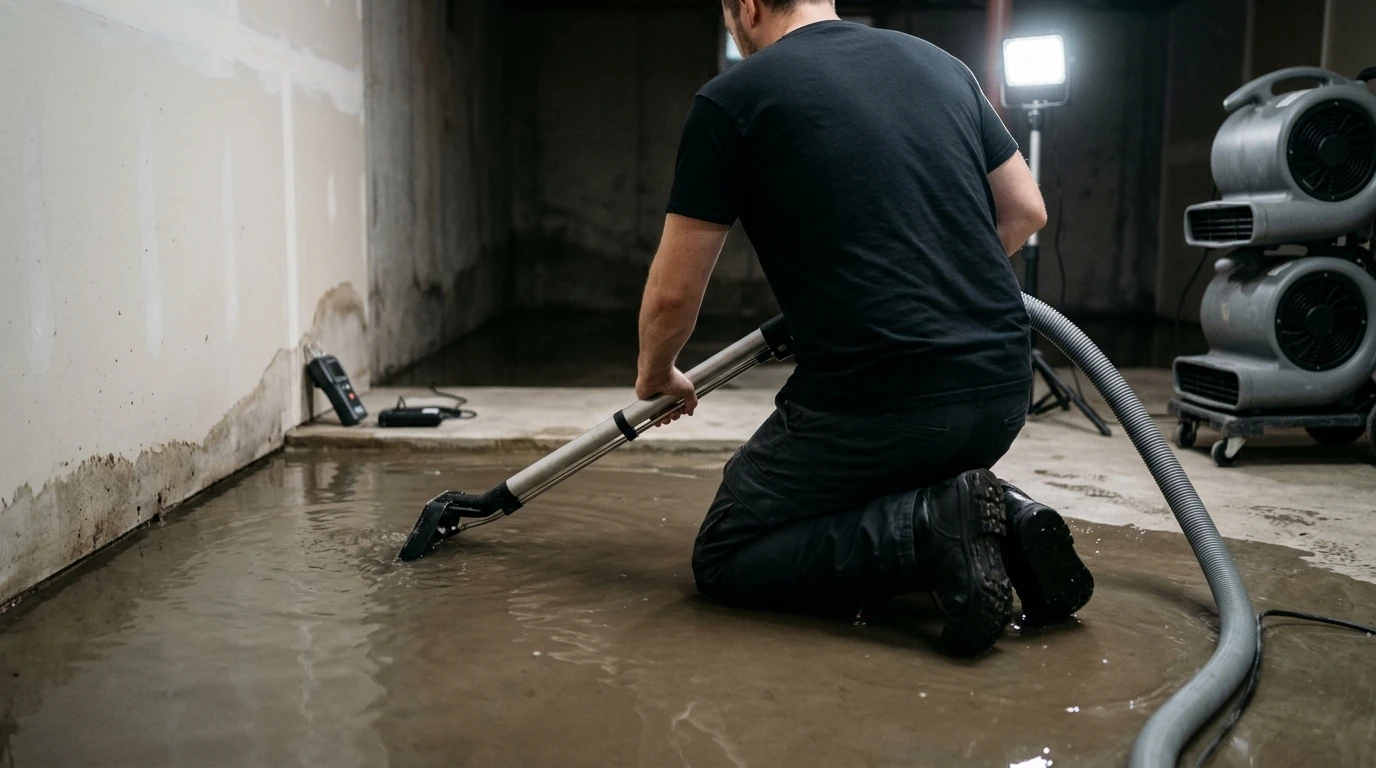
Extraction, pulling standing or saturated water out of the structure, is usually priced separately from drying and runs $3 to $8 per square foot for carpet and pad, or a flat $150 to $400 service minimum for a small area.
A basement near Neabsco Creek or the Occoquan with a few inches of standing water after a storm is a different job than a bathroom floor from a toilet supply line failure, even though both get called “extraction.” Truck-mounted extractors move more water faster on a larger loss; portable extraction wands handle a contained spill. The equipment used, and how many passes it takes to get moisture readings down, is what the line item actually reflects.
What Drives the Price: Water Category, Square Footage and Drying Time
The single biggest price lever is water category, not square footage. Category 1 (clean) water from a supply line costs the least to mitigate because porous materials can often be dried in place. Category 2 (gray) water, from an appliance discharge or a toilet overflow without feces, usually means pulling baseboards and some padding. Category 3 (black) water, which includes any sewer backup, a toilet overflow with feces, or flood water from outside, requires removing more porous material and applying antimicrobial treatment under the ANSI/IICRC S500 standard, which adds labor and disposal cost.
Square footage and how long the water sat matter too. Water that sat overnight before anyone called has usually wicked further up drywall and under more flooring, which means a bigger demo footprint even on an otherwise clean-water loss. If your loss involves a backup from a drain or sewer line, see our sewage backup cleanup cost guide for Category 3-specific pricing.
How Much Do Air Movers and Dehumidifiers Cost Per Day?
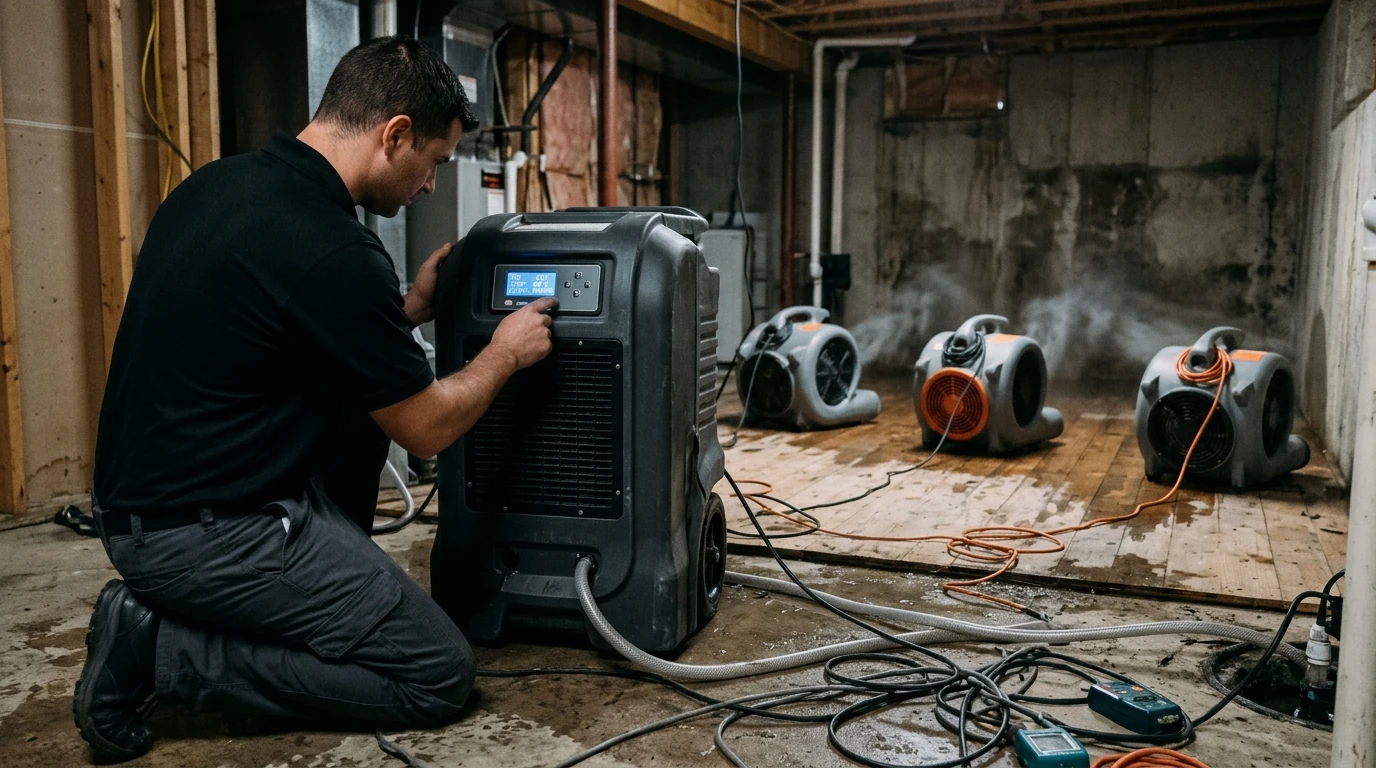
Drying equipment is typically billed per unit per day, with air movers running $35 to $50/day and a commercial LGR dehumidifier running $100 to $175/day.
A single wet room might need 3-4 air movers and one dehumidifier, so a standard 3-day dry-out (the IICRC S500 benchmark for most clean-water losses) runs roughly $400 to $700 in equipment alone, on top of the extraction and labor already in the table above. Larger or more contaminated losses need more units and longer run times, which is why a basement flood can push past 5 days of equipment charges before it’s clear.
Will Insurance Cover Water Mitigation Costs?
Most homeowners policies cover sudden, accidental water damage, like a burst pipe or a supply line that suddenly fails, including the mitigation phase, but they generally exclude gradual leaks and long-term seepage.
Sewer backups and sump pump failures are usually NOT covered unless you’ve added a water backup endorsement to your policy, and flood water from outside (storm surge, rising creeks, surface water) needs a separate flood policy through the NFIP, not your homeowners policy. The Insurance Information Institute outlines what a standard policy typically covers in more detail, and Virginia’s Bureau of Insurance regulates how insurers in the state must handle these claims. You have a duty to mitigate once damage starts, so document everything with photos before cleanup begins and keep every receipt; that protects the claim either way. For a fuller breakdown, see our guide on whether homeowners insurance covers water damage.
How Do I Read a Water Mitigation Estimate?
A legitimate mitigation estimate breaks into separate line items you can check against the work actually done, not one lump “water damage” number.
Look for: an emergency service call fee, extraction (priced per square foot or as a flat minimum), equipment rental by unit and by day, antimicrobial application (only if Category 2 or 3), disposal of removed materials, and monitoring visits (typically daily). If a line item says “demolition” or “reconstruction,” that’s a separate scope, mitigation estimates and rebuild estimates should never be the same document. Our water damage restoration cost guide breaks down what the full restoration project, mitigation plus rebuild, typically runs.
What Happens During Water Mitigation?
- Assessment and moisture mapping - a technician uses a moisture meter to find how far water traveled, including inside walls.
- Extraction - standing and saturated water is pulled out with extractors sized to the loss.
- Containment and material removal - for Category 2/3 water, affected porous materials (carpet pad, some drywall) are removed.
- Drying equipment setup - air movers and dehumidifiers are placed based on the moisture map, not just the room count.
- Daily monitoring - equipment is checked and adjusted until moisture readings hit dry standard.
- Clearance and handoff - once dry, the scope moves to reconstruction if materials were removed.
Mitigation stops the clock on further damage; it doesn’t put your home back together. If your estimate stops there, make sure you know who’s handling the rebuild next and get that scope in writing too.
About 24/7 Restoration INC.
24/7 Restoration INC. is an IICRC Certified Firm (license #2705199581) based in Woodbridge, VA, offering 24/7 emergency response across Northern Virginia, Stafford, Fredericksburg, and Spotsylvania. Their technicians hold IICRC WRT (water) and AMRT (mold) credentials and handle water cleanup, water damage restoration, sewage cleanup, mold remediation, and reconstruction. This guide was prepared with input from the 24/7 Restoration INC. team, led by Nerly Melgar Melgar.
Need help now? Call 24/7 Restoration INC. at (703) 727-0385.
Video Transcript
A pipe just burst in your Woodbridge home, and a crew is quoting you a mitigation number. What does that pay for? Most Woodbridge mitigation jobs run four hundred to seven thousand dollars, depending on water amount, contamination, and square footage. The biggest price driver isn’t size, it’s water category. Clean water from a burst pipe costs far less than gray or sewage water. Water that sits overnight wicks further into drywall and flooring, meaning more demolition, even on an otherwise clean water loss. Extraction alone runs three to eight dollars per square foot, or a flat minimum fee for a small spill. Air movers run thirty-five to fifty dollars a day, and dehumidifiers run about one hundred to one seventy-five for a three-day dry-out. Bigger or contaminated losses need more equipment and longer run times, so a flooded basement can take five days or more to dry. Most policies cover sudden accidental damage like a burst pipe, but sewer backups and gradual leaks often need separate coverage. Document everything with photos before cleanup starts, keep your receipts, and ask for a written, itemized estimate. Don’t guess what your mitigation quote covers. Call 24/7 Restoration INC. at (703) 727-0385 to schedule an assessment.