TL;DR: In Virginia, water cleanup typically costs $500 to $1,500 for a small, clean-water leak in one room, and climbs to $5,000 to $10,000 or more when sewage, flooding, or multiple rooms are involved. The biggest cost drivers are how contaminated the water is, how much square footage it touched, and how long the water sat before cleanup started.
If you’re standing over a wet carpet in a Lake Ridge split-level or watching water creep across the basement floor near Potomac Mills, the question isn’t abstract: you need a number before you can decide what to do next. Here’s what water cleanup actually costs across Northern Virginia, broken down by the situation you’re actually in.
How much does water cleanup cost in VA?
Most Virginia homeowners pay between $500 and $10,000 for professional water cleanup, with a small single-room, clean-water job typically landing around $500 to $1,500 and multi-room clean-water jobs around $1,500 to $4,000. The final number depends heavily on the water’s contamination level (what the industry calls its category) and how many square feet got wet.
A burst supply line caught within a few hours costs far less than a sewer backup that sat overnight. Response speed matters almost as much as the source: water left standing for 24 to 48 hours starts growing mold and soaking into subfloors, which turns a drying job into a tear-out job.
Typical Water Cleanup Cost Ranges in Virginia
| Scenario | Typical Cost Range |
|---|---|
| Small leak, single room, Category 1 (clean) water, under 200 sq ft | $500 to $1,500 |
| Category 1 water, multiple rooms, standard air movers + dehumidifiers | $1,500 to $4,000 |
| Category 2 (gray water) from an appliance discharge or a toilet overflow with no feces | $2,500 to $6,000 |
| Basement flooding with saturated carpet, drywall, or flooring removal | $3,000 to $8,000 |
| Category 3 (black water) or sewage backup requiring antimicrobial treatment | $5,000 to $10,000+ |
| Large-loss event affecting a full floor or multiple units | $10,000 to $25,000+ |
These are typical industry ranges for the region, not a quote. A written scope after an on-site inspection is the only way to know the real number for a specific property.
What makes water cleanup cost more or less?
The water’s category under the IICRC S500 standard is the single biggest factor, because it determines whether materials can be dried in place or have to come out. Category 1 (clean) water from a supply line can often be dried; Category 2 (gray water) and Category 3 (black water, including any sewer backup) usually require removing porous materials like carpet pad, baseboards, and sometimes drywall.
Beyond category, a few other things move the price:
- Square footage affected. A single bathroom costs less to dry than a finished basement.
- How long the water sat. Water caught within hours is cheaper to address than water discovered after a weekend away, since longer exposure means more saturated materials and a higher chance of hidden mold under flooring or behind baseboards.
- Materials involved. Hardwood floors, plaster walls, and insulation are harder and slower to dry (what IICRC calls a Class 3 or 4 situation) than vinyl flooring or painted drywall.
- Equipment access. A finished basement with low ceilings or a crawlspace takes longer to set up air movers and LGR dehumidifiers than an open living room.
- Follow-up work. If moisture sat long enough for mold to start (which can begin in as little as 24 to 48 hours on wet drywall, per the EPA), remediation adds to the total.
Will homeowners insurance cover water cleanup?
Most standard homeowners policies cover sudden, accidental water damage, like a burst pipe or a water heater that suddenly fails, but they exclude gradual leaks, long-term seepage, and flooding from outside the home. Sewer and sump pump backups are typically only covered if you’ve added a separate water backup endorsement.
According to the Insurance Information Institute, the key distinction insurers draw is sudden versus gradual. A supply line that splits overnight is usually a covered peril. A slow leak behind a washing machine that went unnoticed for months typically is not, because insurers treat it as a maintenance issue.
True flooding (water entering from outside, a rising creek, or storm surge) isn’t covered by a standard homeowners policy at all. That requires a separate flood policy through the National Flood Insurance Program or a private flood carrier. If your home sits near the Occoquan River or in a low-lying part of the service area, it’s worth checking your flood zone status at the FEMA Flood Map Service Center before you need it.
Homeowners also have a duty to mitigate damage: starting cleanup and drying promptly, and documenting everything with photos and receipts, protects the claim regardless of which way it’s decided. Our guide to what homeowners insurance actually covers walks through this in more detail.
What does the water cleanup process actually involve?
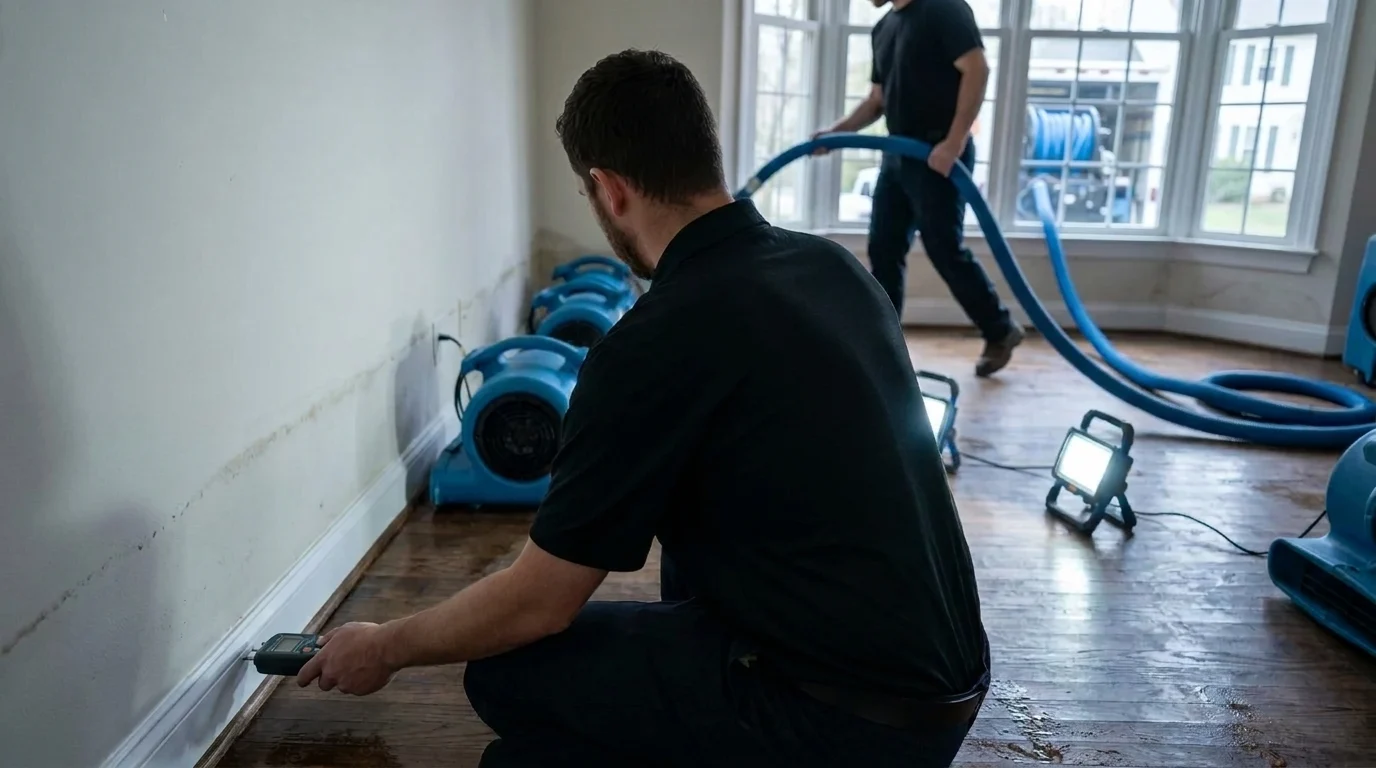
Professional water cleanup follows a set sequence: inspection and moisture mapping, extraction, structural drying, cleaning and antimicrobial treatment if needed, and reconstruction. Each phase has its own cost and timeline, which is why two jobs with the same square footage can land at very different prices.
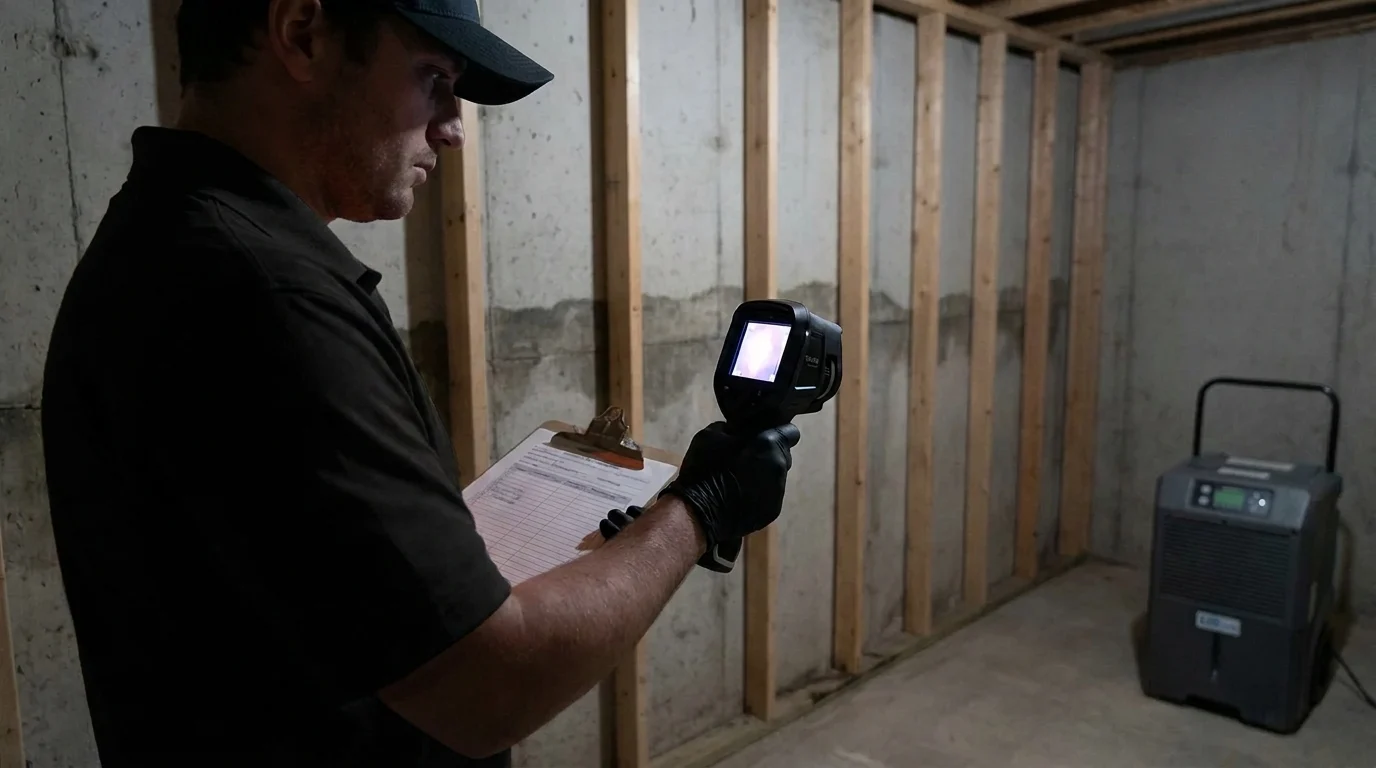
- Inspection and moisture mapping. A technician uses a moisture meter and sometimes a thermal camera to find how far the water traveled, including behind walls and under flooring, and determines the water’s category.
- Extraction. Standing water is removed with pumps or truck-mounted extractors, usually within the first visit.
- Structural drying. Air movers and LGR dehumidifiers run for several days, with daily moisture checks to confirm materials are drying to industry-standard levels rather than just looking dry on the surface.
- Cleaning and treatment. For Category 2 or 3 water, surfaces get cleaned and treated with antimicrobial products to address contamination risk.
- Reconstruction. Any removed drywall, flooring, or trim gets rebuilt. This is where a company that also handles reconstruction in-house, rather than handing the job to a separate contractor, can save a homeowner weeks.
A typical single-room Category 1 job dries in 3 to 5 days. A Category 3 loss with material removal and rebuild can take two to four weeks start to finish.
Who should you call for water cleanup in Virginia?
For active water damage, you want a company that can respond quickly, document the loss for your insurance adjuster, and handle both the drying and the rebuild. Call 24/7 restoration Inc at (703) 727-0385 for a water cleanup assessment in Woodbridge and the surrounding Northern Virginia area; a written scope after inspection is the only reliable way to get an exact number for your specific situation, not a phone estimate.
For more on what a full water damage job costs beyond cleanup alone, including drywall and flooring replacement, see our Woodbridge water damage restoration cost guide.
About 24/7 restoration Inc
24/7 restoration Inc is an IICRC Certified Firm serving Woodbridge, VA and the surrounding Northern Virginia region, holding IICRC WRT (water) and AMRT (mold) certifications and operating under license #2705199581. The team handles water cleanup, water damage restoration, sewage cleanup, reconstruction, and general contracting, and is available 24/7 for emergency response.