TL;DR: Remodeling after a covered loss in Woodbridge, VA usually means rebuilding to match (or improve on) what was damaged, not a discretionary renovation. A licensed general contractor handles the scope, pulls Prince William County permits where required, and coordinates with the insurance adjuster so the rebuild lines up with what the policy actually pays for. Homeowners who treat this as a normal remodel, without that coordination, are the ones who end up paying out of pocket for mismatched flooring or an unpermitted addition.
If a burst pipe in your Lake Ridge townhome just took out the kitchen floor and half the drywall, or a sewage backup in Dale City left you staring at a gutted first floor, you are not shopping for a Pinterest-board remodel. You are trying to figure out who rebuilds a home after the restoration crew leaves, and whether that rebuild gets paid for by your insurer or out of your own pocket. That’s a different project than a voluntary kitchen update, and it runs on different rules.
What Does “Remodeling” Mean After a Water or Flood Loss?
After a covered loss, remodeling means restoring the structure to its pre-loss condition, or slightly better where code now requires it, using the insurance payout as the primary budget. It is not an open-ended design project.
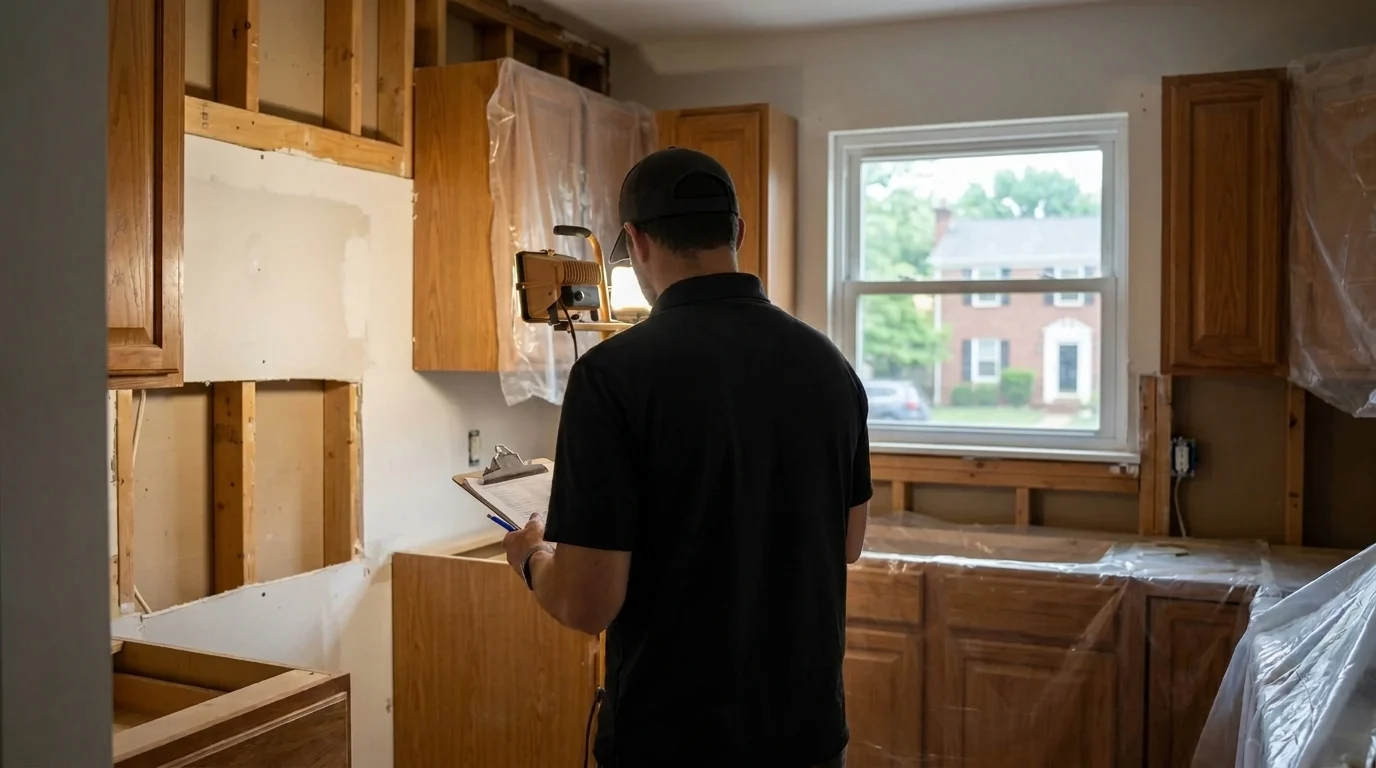
That distinction matters because it changes what gets quoted. A voluntary remodel starts with a wish list: new cabinets, a different layout, upgraded fixtures. A loss-driven rebuild starts with a scope of work tied to what was actually damaged, documented room by room with photos, moisture readings, and in some cases a sketch from the adjuster. Anything beyond that scope, a larger island, a bump-out, relocated plumbing, is an upgrade the homeowner pays for separately, on top of the insurance-funded portion.
Prince William County also enforces current building code on any permitted work, which means a 1980s kitchen rebuild in Woodbridge may need updated GFCI circuits, different vent clearances, or revised egress in a finished basement, even if none of that failed in the original loss. A contractor who only works from “put it back the way it was” will miss that; a contractor used to insurance-scope rebuilds will flag it before the drywall goes up.
How Is a Loss-Driven Rebuild Different From a Standard Remodel?
A loss-driven rebuild is scoped around the adjuster’s estimate and the drying or demolition that already happened, while a standard remodel is scoped around the homeowner’s design goals and budget alone.
In practice, three things change:
- Sequencing. Mitigation (water extraction, structural drying, sanitization) has to finish and pass a moisture check before framing, insulation, or drywall goes back in. Rebuilding over material that hasn’t dried to IICRC S500 standards is how homeowners end up with a second mold problem a year later.
- Documentation. Every material replaced needs to tie back to the adjuster’s line-item estimate (a process the Insurance Information Institute walks through from the claim side). A contractor who can produce photos, moisture logs, and a matching invoice line gets paid faster and with fewer supplemental disputes.
- Code upgrade coverage. Most Virginia homeowners’ policies include some ordinance-or-law coverage, but it’s usually capped at 10% of the dwelling limit. If code requires more than that cap covers, the contractor needs to flag it early, not after cabinets are ordered.
Our earlier post on general contracting, reconstruction, and renovation in Woodbridge covers how that scope-to-permit process typically runs locally if you want the longer version.
What Should Be in the Remodeling Scope of Work?
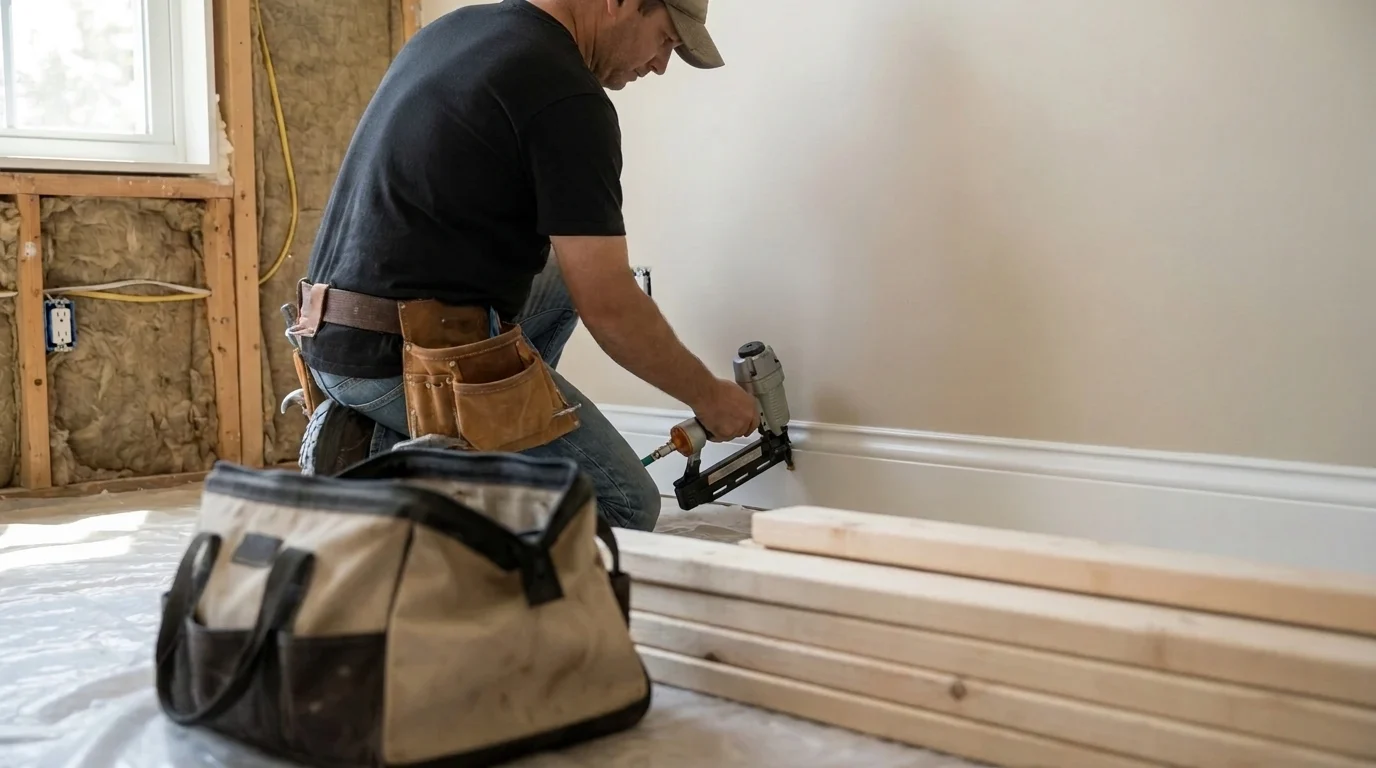
A complete scope of work lists every room affected, the materials being replaced, the permits required, and a line-item cost tied to either the insurance estimate or a separate upgrade budget.
At minimum, ask for a written scope that includes:
- Room-by-room material list (flooring type, drywall thickness, trim profile) matched to what was there before
- Permit requirements, called out by trade (electrical, plumbing, structural)
- A clear split between “insurance-covered” and “owner-upgrade” line items, so there’s no ambiguity on the final invoice
- A projected timeline from demo-complete to final walkthrough
Homeowners in Potomac Mills and other condo or townhome communities should also ask whether the HOA requires separate approval for exterior changes or shared-wall work before the contractor schedules anything. Skipping that step is a common cause of mid-project delays.
Who Do You Call First, a Remodeler or a Restoration Contractor?
If the damage is recent (standing water, visible mold growth, a sewage backup), call a restoration contractor first, not a remodeling contractor. Mitigation has to happen before any rebuild framing makes sense, and most standalone remodelers aren’t equipped to run extraction equipment or document a claim.
If the drying and demolition are already done and you’re just looking for the rebuild phase, a contractor who handles both reconstruction and general contracting under one roof saves you a second set of estimates and a second point of contact with your adjuster. 24/7 restoration Inc handles water cleanup, sewage cleanup, and the reconstruction and general contracting work that follows in Woodbridge and the surrounding Prince William County area, which is the more common path for homes that are still mid-claim.
If you’re further along and comparing contractors generally, our guide to choosing a restoration company covers the licensing and insurance questions worth asking before anyone signs a contract.
Whatever stage you’re at, get the scope of work in writing before demo starts on the rebuild side. A verbal “we’ll put it back the way it was” is where disputes over materials, timelines, and final cost usually start.
About 24/7 restoration Inc
The company is an IICRC Certified Firm based in Woodbridge, VA, holding Virginia contractor license #2705199581 and carrying IICRC Water Restoration Technician (WRT) and Applied Microbial Remediation Technician (AMRT) certifications. Its crews handle water cleanup, sewage cleanup, water damage restoration, reconstruction, and general contracting across Woodbridge, Dale City, Lake Ridge, Manassas, and the broader Prince William County area, operating on a 24/7 schedule.
Need help now? Call 24/7 restoration Inc at (703) 727-0385.