If you just got a mold inspection report back for your Woodbridge home and the number attached to it doesn’t make sense yet, here’s what’s actually driving the price. Mold remediation costs in Northern Virginia vary more by how much containment and material removal the job needs than by how big the moldy patch looks on the surface. A stained bathroom ceiling and a flooded basement with saturated drywall both get called “mold jobs,” but they’re priced in completely different brackets.
In the Woodbridge area, most mold remediation jobs run $1,500 to $6,000. Small, contained jobs (a closet, a bathroom ceiling, a single wall section under 10 square feet) often come in under $1,500. Whole-basement or crawl-space jobs, common in older homes around Lake Ridge, Dale City, and the properties closer to the Occoquan River, typically land between $2,500 and $6,000. Extensive contamination that has reached HVAC ductwork or spread across multiple rooms can push past $10,000.
Mold Remediation Cost in Woodbridge, VA by Scope
The table below reflects typical industry ranges for this region. Every job is different: the only way to get a real number is a written scope from an inspection.
| Job Scope | Typical Cost Range |
|---|---|
| Small bathroom, closet, or single wall (under 10 sq ft) | $500 - $1,500 |
| Contained room section with drywall removal (10-100 sq ft) | $1,500 - $3,500 |
| Basement mold remediation (moisture-driven, whole room) | $2,500 - $6,000 |
| Crawl space mold remediation | $1,500 - $4,500 |
| Whole-house or attic contamination reaching HVAC | $6,000 - $15,000+ |
| Moisture source repair (sump pump, grading, plumbing fix) | $500 - $5,000+, varies widely |
That last line matters more than it looks. A remediation that doesn’t fix the moisture source is a remediation that comes back.
What Actually Drives the Price: Containment, HEPA Filtration, and Removal
Three things set the final number: how much of the structure gets sealed off in containment, how many days of HEPA air scrubbing that containment needs, and how much porous material has to be physically removed instead of cleaned in place.
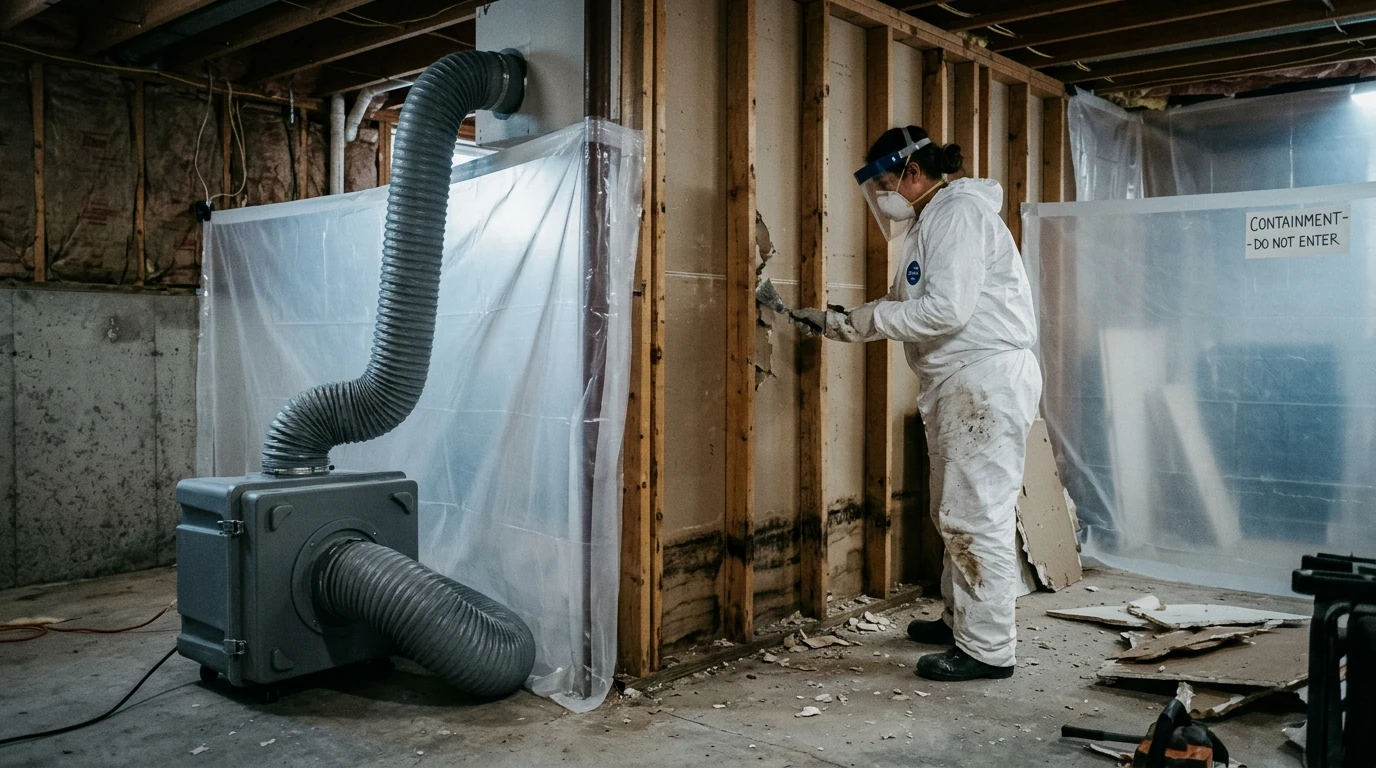
Containment means sealing the work area with poly sheeting and running it under negative air pressure, so mold spores disturbed during the work don’t spread into the rest of the house. A single closet needs a light containment; a basement with an open floor plan needs a full negative-air setup, which adds equipment-rental days to the bill.
HEPA air scrubbers run continuously through the job, often for 2 to 5 days depending on the volume of air being filtered. Porous materials (drywall, carpet, insulation, some subfloor) that have been colonized usually get removed and replaced rather than cleaned, following the ANSI/IICRC S520 Standard for Professional Mold Remediation. Non-porous surfaces like studs and concrete get HEPA-vacuumed and treated with an antimicrobial instead. Virginia regulates mold remediation contractors through the Department of Professional and Occupational Regulation, so ask any contractor you’re comparing whether they meet the state’s licensing requirements before you sign anything.
Why Basements and Crawl Spaces Cost More in Northern Virginia
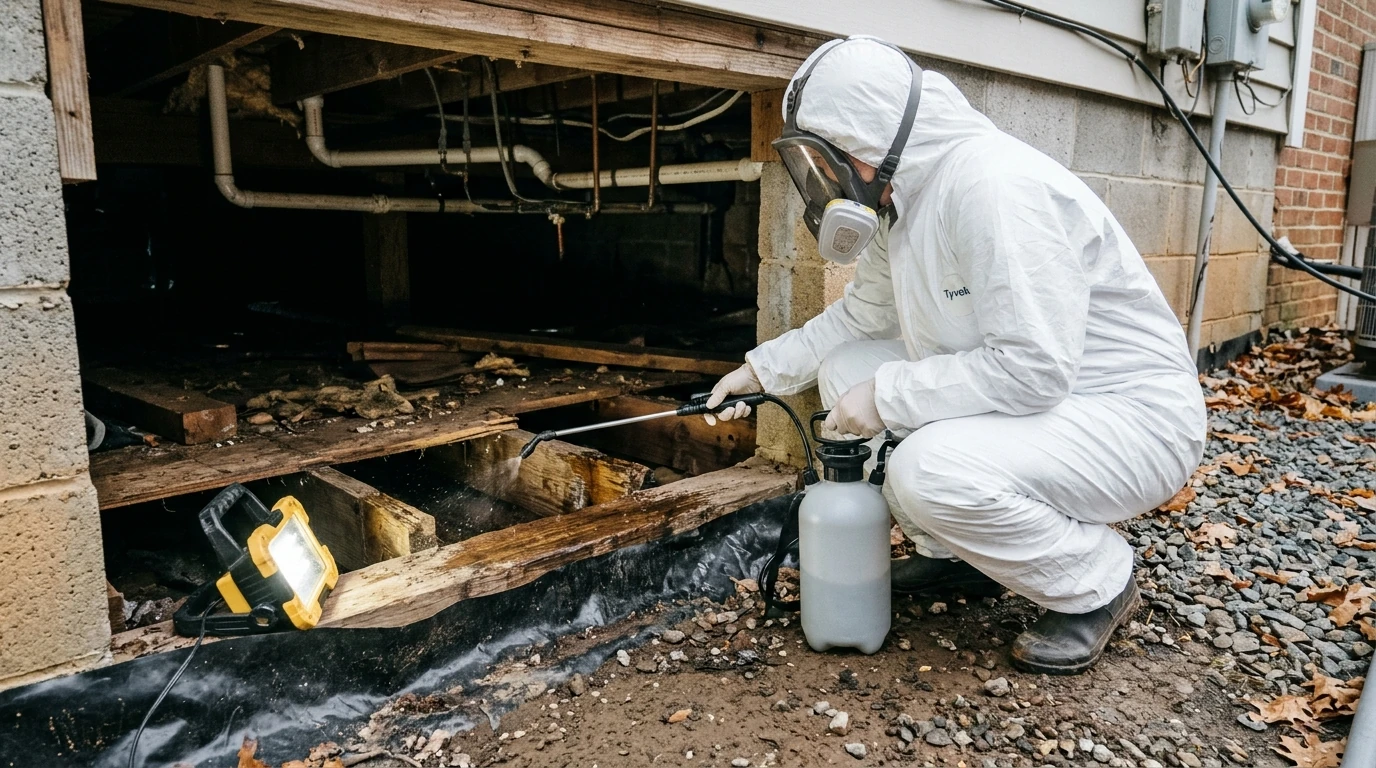
Basements and crawl spaces cost more because the moisture problem that caused the mold is usually still active when the remediation starts. Clay-heavy soil and high humidity around Woodbridge and the Occoquan corridor keep crawl spaces damp for weeks after a wet season, which means mold keeps regrowing until the source is addressed, not just the visible growth.
Older homes in Lake Ridge, Dale City, and similar established Northern Virginia neighborhoods often have crawl spaces with limited ventilation, dirt floors, or no vapor barrier, which gives mold a constant moisture supply. If the mold followed a water event like a sump pump failure or a slow foundation leak, that moisture source repair is a separate line item from the mold remediation itself, which is part of why basement jobs land at the higher end of the range.
If you’re not sure whether what you’re looking at is actually mold or just a stain, our guide on signs of hidden mold and our walkthrough on how to test for mold cover how to tell before you pay for an inspection.
Will Homeowners Insurance Pay for Mold Remediation?
Most homeowners insurance only covers mold remediation when the mold grew from a sudden, covered water loss, like a burst pipe, not from a gradual leak or long-term moisture. Many policies also cap mold coverage at a specific dollar amount even when it is covered, so it’s worth checking your declarations page for a mold limit before you assume the full job is paid for.
Slow leaks, poor drainage, and long-term crawl space humidity are typically treated as a maintenance issue, which insurers usually exclude. Insurers evaluate these claims based on standard homeowners insurance coverage, and coverage details vary by carrier and state, so never assume a claim will be approved before you have it in writing. Photographing the damage, keeping the moisture source repair invoice separate from the remediation invoice, and getting a written scope before work starts all protect the claim if you do file one.
What Happens During a Mold Remediation Job
- Inspection and moisture mapping. A technician identifies the mold’s extent and the moisture source feeding it, often with a moisture meter and sometimes an air or surface sample.
- Containment setup. Poly sheeting seals the work area; negative air machines keep spores from migrating to clean parts of the house.
- HEPA air filtration. Air scrubbers run throughout the job to capture airborne spores generated during demolition and cleaning.
- Material removal. Colonized porous materials, drywall, insulation, carpet, are removed and bagged for disposal.
- Cleaning and antimicrobial treatment. Remaining non-porous surfaces are HEPA-vacuumed and treated.
- Drying. Any residual moisture gets dried down with air movers and dehumidifiers so conditions can’t support regrowth.
- Clearance check. A final visual and moisture check confirms the area is dry and clean before containment comes down and reconstruction begins.
When you’re comparing written estimates, look for these steps itemized by room, along with equipment-rental days and square footage of material removal, rather than a single lump-sum number. A vague one-line estimate is harder to hold a contractor to later.
Every mold job is different, and a real number only comes from an in-person inspection and a written scope before work begins. Schedule a mold assessment with 24/7 Restoration INC. or call (703) 727-0385 to get a written scope for your specific situation. If the mold followed a water event, our water damage restoration team handles the moisture source and the mold remediation together so the job doesn’t get split between two contractors.
About 24/7 Restoration INC.
24/7 Restoration INC. is an IICRC Certified Firm, holding IICRC AMRT mold remediation certification, serving Woodbridge, VA and the surrounding Northern Virginia region, including Arlington, Alexandria, Manassas, and Fredericksburg. The company is licensed and insured (VA license #2705199581) and holds a 5.0 Google rating across 68 reviews. Their crews handle mold remediation, water damage restoration, flood damage restoration, sewage cleanup, reconstruction, and related services across the region, available 24/7.
Video Transcript
If you just got a mold inspection report back for your Woodbridge home, here’s what actually drives that price tag. Most mold remediation jobs here run between fifteen hundred and six thousand dollars, depending on size and containment needed. Three things set the final number: how much containment is needed, how many days of air scrubbing, and how much material gets removed. A single closet needs light containment, but an open basement needs a full negative-air setup, which adds equipment rental days. Porous materials like drywall and carpet usually get removed and replaced, while studs and concrete get cleaned and treated instead. Basements and crawl spaces cost more because the moisture problem is often still active when remediation begins. Older homes around Lake Ridge and Dale City often have crawl spaces with no vapor barrier, giving mold a constant moisture supply. Homeowners insurance usually only helps when mold comes from a sudden covered event, not gradual leaks, so check your policy’s mold limit. Photographing damage and keeping your moisture repair invoice separate from the remediation invoice helps document any claim you file. Not sure what you’re dealing with? Call 24/7 Restoration INC. at (703) 727-0385 to schedule an assessment.