TL;DR: The best reconstruction company in Woodbridge, VA is one that can run both mitigation and rebuild under the same crew, holds a current Virginia contractor license you can verify yourself through DPOR, writes an itemized repair scope that lines up with your insurer’s estimate, and takes moisture readings before any drywall goes back up. Skip any of those four checks and reconstruction jobs tend to run long, get underpaid by the insurer, or get reopened later.
If your basement or kitchen just finished drying out and now you’re staring at open studs, bare subfloor, and a contractor’s number from your adjuster, you’re past the emergency and into the part that actually rebuilds your house. That’s a different skill set than water extraction, and it’s where a lot of homeowners in Woodbridge, Lake Ridge, and Dale City end up comparing names they’ve never heard of under time pressure. Here’s what separates a reconstruction contractor who’ll get it right from one who’ll leave you chasing change orders.
What makes a reconstruction company the right call after water damage?
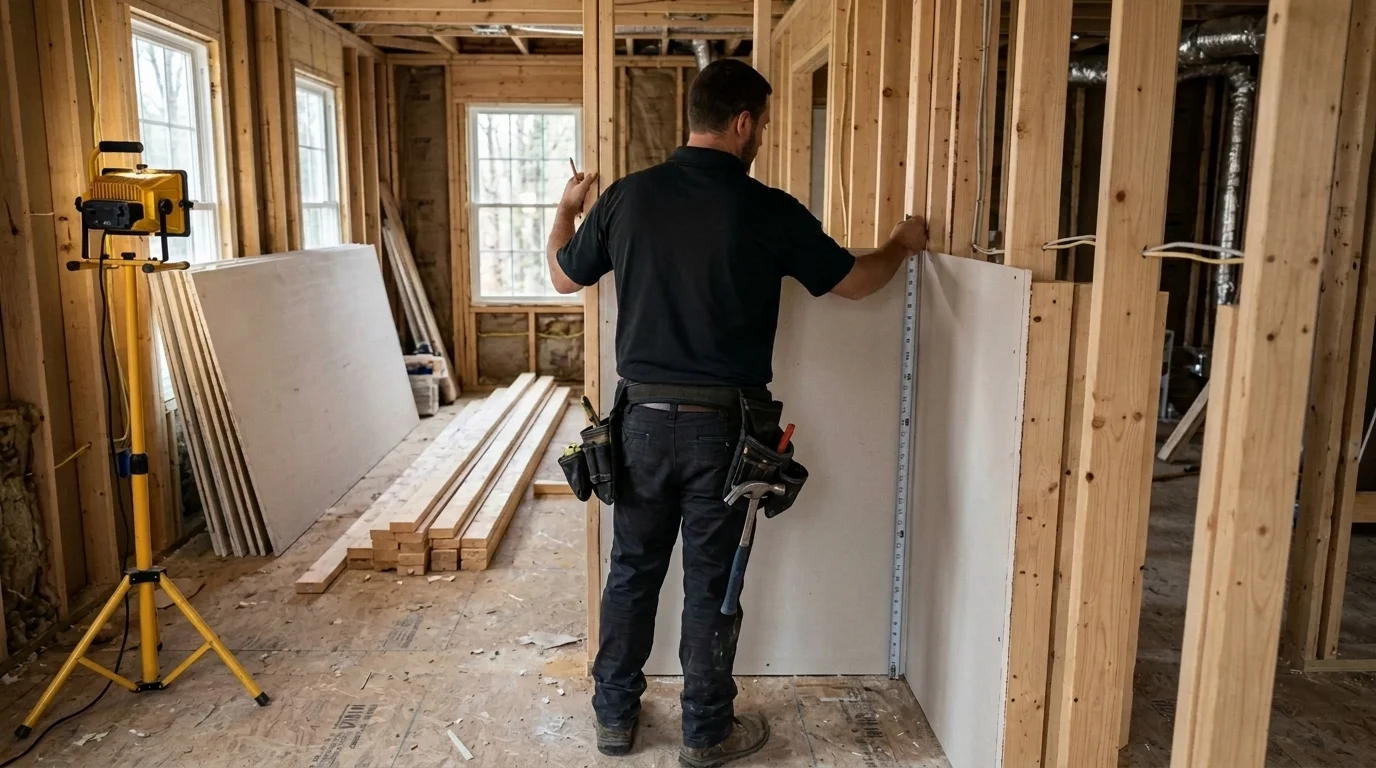
The right reconstruction contractor is the one who can take a water-damaged structure from demo to final paint without handing you off to a second company mid-project. That matters because the crew that did the mitigation already knows which studs got replaced, which subfloor sections were cut out, and where moisture lingered in a wall cavity.
Hand that job to a separate general contractor and you’re re-explaining the damage history, often without the mitigation company’s drying logs or moisture-mapping data. That gap is where scope disputes start: the new contractor either over-scopes out of caution or under-scopes because they never saw the wet drywall before it came down.
Ask directly: did this company handle the water extraction and drying, or are they only quoting the rebuild? Either can work, but if it’s a handoff, get the original mitigation report in writing before the rebuild contract is signed.
Is the contractor’s Virginia license actually current?
Virginia requires a Class A contractor license for projects over $120,000 and a Class B license for mid-size jobs, and you can check any contractor’s license status yourself before signing anything. The Virginia Department of Professional and Occupational Regulation maintains the public license lookup for exactly this reason.
Don’t take a license number on a business card at face value. Pull it up, confirm it’s active, confirm the classification matches the scope of work (a kitchen rebuild with structural framing needs more than a handyman license), and check for any disciplinary history.
Woodbridge sits in Prince William County, which also means permits. Drywall and electrical work behind it, structural framing repairs, and anything touching load-bearing walls typically needs a county permit and inspection, not just a licensed contractor’s say-so. Ask who’s pulling the permit before work starts.
How do you make sure the insurance scope matches the repair plan?
The repair plan should match your insurance company’s estimate line by line, and when it doesn’t, that gap becomes a supplement request, not a surprise bill. A written scope lets you see exactly where the numbers diverge before demo day, not after.
Insurers write estimates using line-item software (often Xactimate) that prices materials, labor, and disposal by category. A reconstruction contractor who does insurance work regularly knows how to write a comparable scope and file a supplement when the adjuster’s estimate missed something, like water-damaged subfloor that wasn’t visible until the flooring came up.
Get the itemized scope in writing before signing. The Insurance Information Institute’s guide to settling claims after a disaster is a useful reference for how that negotiation typically works, including what documentation strengthens a supplement request.
What has to happen before anyone closes up the walls?
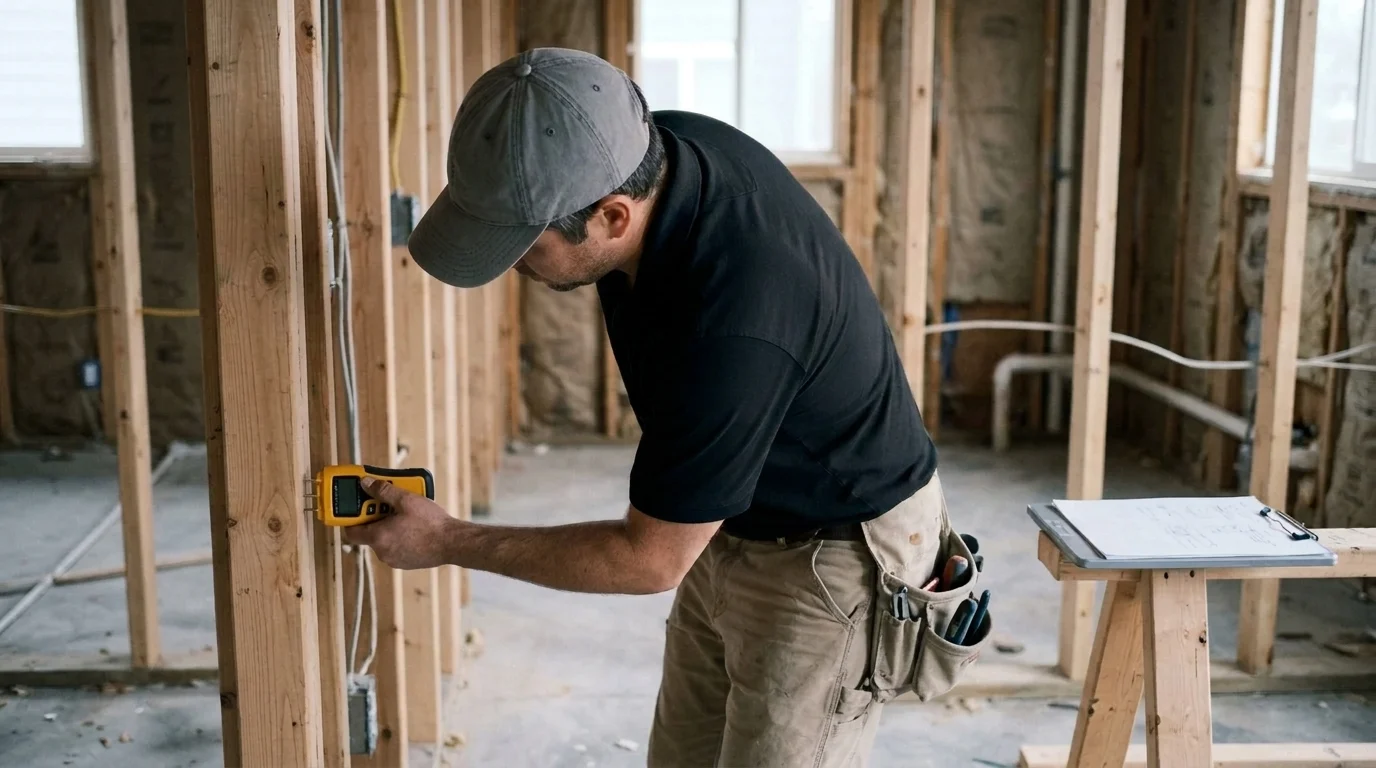
Moisture readings on the exposed studs and subfloor should come back at or near the material’s dry standard before any drywall, insulation, or flooring goes back in. Closing a wall over damp framing is how mold complaints show up three months later, after the finishes are already installed.
A contractor working to the ANSI/IICRC S500 water damage restoration standard will document those readings with a moisture meter before calling the structure ready for rebuild. Ask to see that documentation, not just a verbal “it’s dry.”
This is also the moment to confirm insulation gets replaced where it was saturated (wet fiberglass batt doesn’t dry out and re-insulate the same way) and that any affected subfloor sections were cut back to solid, dry material rather than patched over a soft spot.
How long does reconstruction take after water damage in Woodbridge?
A single damaged room, like a bathroom or a bedroom with drywall and flooring replacement, typically runs one to three weeks once materials are selected and demo is complete. Multi-room jobs, especially kitchens with cabinetry, usually run six to eight weeks or longer because custom cabinets alone can have a four-to-six-week lead time.
The biggest variable isn’t labor, it’s material selection and lead time. Flooring that has to be special-ordered to match an existing hardwood run, or cabinet boxes built to a specific layout, will set the schedule more than the drywall and paint phase ever does.
If you’ve already started a mitigation job and want to understand how the rebuild phase connects to it, our companion piece on general contracting and reconstruction in Woodbridge walks through that handoff in more detail, and how to choose a restoration company covers the vetting questions that apply before any contract is signed.
Once the scope is written, the license is verified, and the moisture readings are in hand, the rebuild itself is the most predictable part of the whole process. A reconstruction and general contracting crew that also handled the original water damage restoration carries that continuity forward instead of starting from a blank file.
About 24/7 restoration Inc
This Woodbridge-based team is an IICRC Certified Firm holding IICRC WRT and AMRT certifications, OSHA trained, and EPA Lead-Safe Certified, operating under Virginia license #2705199581. They serve Woodbridge and the surrounding Northern Virginia area, including Lake Ridge, Dale City, Manassas, and Fairfax, handling water damage mitigation, sewage cleanup, general contracting, and reconstruction. Schedule a reconstruction walkthrough at (703) 727-0385.
Video Transcript
Your basement or kitchen finally dried out, but now you’re staring at open studs and bare subfloor, wondering who rebuilds it right. Reconstruction is a different skill than water extraction, and picking the wrong contractor can mean scope disputes and walls reopened later. The right contractor already handled your drying, so they know exactly which studs, subfloor sections, and wall cavities need attention. Always verify your contractor’s Virginia license through DPOR yourself, confirming it’s active and matches the size of your rebuild. In Prince William County, structural framing and electrical work typically require permits and inspections, so ask who’s pulling them first. Your repair plan should match your insurer’s line-item estimate closely, so any gaps become a documented supplement, not a surprise bill. Before any drywall goes back up, moisture readings on studs and subfloor should meet dry standards, not just a verbal assurance. Wet insulation won’t dry and perform the same way again, so ask whether saturated batts and soft subfloor sections are being replaced. A single damaged room often takes one to three weeks, while kitchens with custom cabinets can run six to eight weeks or longer. Call 24/7 Restoration Inc at (703) 727-0385 to schedule an assessment and get your home rebuilt the right way.